
Keeping Little Ones Safe- Every Second Counts
When you’re caring for young children, safety isn’t just a checklist, it’s a mindset. At Bright Ideas, your child’s well-being is always our top priority. From snack time to playtime, our teachers follow strict safety protocols designed to prevent accidents and respond calmly and confidently if one occurs.
One of the most important (and often overlooked) safety topics for families is choking prevention and CPR readiness. These aren’t just classroom concerns; they’re life skills that every parent, caregiver, and teacher should understand.
Understanding Choking Risks in Early Childhood
Young children explore the world through touch and taste which means just about everything looks like a snack! Because their airways are smaller and their chewing skills are still developing, choking can happen quickly and unexpectedly.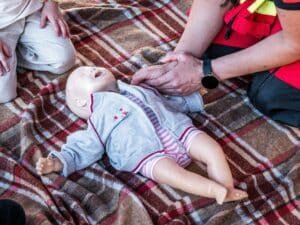
According to the American Academy of Pediatrics (AAP), choking is one of the leading causes of injury in children under age four. But here’s the good news: most choking incidents are preventable through awareness, preparation, and proper food handling.
At Bright Ideas, our teachers are trained in both infant and child CPR and First Aid, ensuring we can respond immediately and effectively in emergencies. Our classrooms are designed with safety in mind from age-appropriate toys to supervised mealtimes.
Common Choking Hazards for Young Children
Many everyday foods and small objects can become dangerous if not managed carefully. Parents and caregivers should be aware of these common choking risks:
- Round or hard foods: grapes, cherry tomatoes, hot dogs, hard candies, raw carrots
- Sticky foods: peanut butter, marshmallows, or chunks of cheese
- Small toys and parts: beads, buttons, coins, LEGO pieces
- Household items: balloons, batteries, pen caps, jewelry
The CDC recommends cutting foods into pea-sized pieces for toddlers and quartering round items like grapes or cherry tomatoes. Encourage children to sit while eating, chew slowly, and avoid walking or talking with food in their mouths.
At Bright Ideas, mealtimes are calm, seated, and fully supervised like no running with snacks or distracted eating. Teachers use these moments to model safe habits and mindful eating behaviors.
What to Do If a Child Is Choking
Knowing what to do in the first few seconds can save a life. Here’s what trained caregivers (and parents) should do:
- Stay calm and assess quickly. If a child is coughing forcefully, encourage them to keep coughing.
- If the child cannot cough, speak, or breathe, call 911 immediately.
- For children over one year, use the Heimlich maneuver (abdominal thrusts):
- Stand behind the child, place your fist just above their navel, grasp it with your other hand, and thrust inward and upward until the object is expelled.
- For infants under one year, use back blows and chest thrusts:
- Support the infant face down on your forearm, deliver five firm back blows between the shoulder blades, then turn the baby over and give five gentle chest thrusts with two fingers.
If the child becomes unresponsive, begin CPR and continue until help arrives.
Every Bright Ideas teacher is trained to respond using these techniques and follows annual recertification through recognized organizations like the Red Cross and American Heart Association.
Why CPR Training Matters for Parents
While no one likes to think about emergencies, preparation makes all the difference. The AAP and Red Cross strongly encourage parents and caregivers to take a certified infant and child CPR course. These classes are hands-on and confidence-building, often offered locally or online in just a few hours.
Knowing what to do and staying calm while doing it can save precious seconds in an emergency. Even if you never have to use these skills, the peace of mind is invaluable.
Many families find it empowering to learn CPR together as a group. It’s a wonderful way for parents, grandparents, and babysitters to stay prepared and coordinated.
How Bright Ideas Prioritizes Safety
Our safety protocols go far beyond compliance. Every staff member at Bright Ideas:
- Maintains current CPR and First Aid certification
- Reviews monthly safety drills and emergency response plans
- Supervises children closely during meals and playtime
- Uses age-appropriate classroom materials and toys
- Follows cleaning and sanitizing routines that meet or exceed state standards
We believe that when parents and caregivers share the same knowledge, children stay safer everywhere — at home, in care, and beyond.
At Bright Ideas, your child’s safety is our promise. From CPR-trained staff to daily supervision and safe snack practices, we take every measure to protect the little ones you love most. Want to learn more about how we create a secure, nurturing environment for every child? Contact us or schedule a tour today — and see the ABC commitment to care in action.